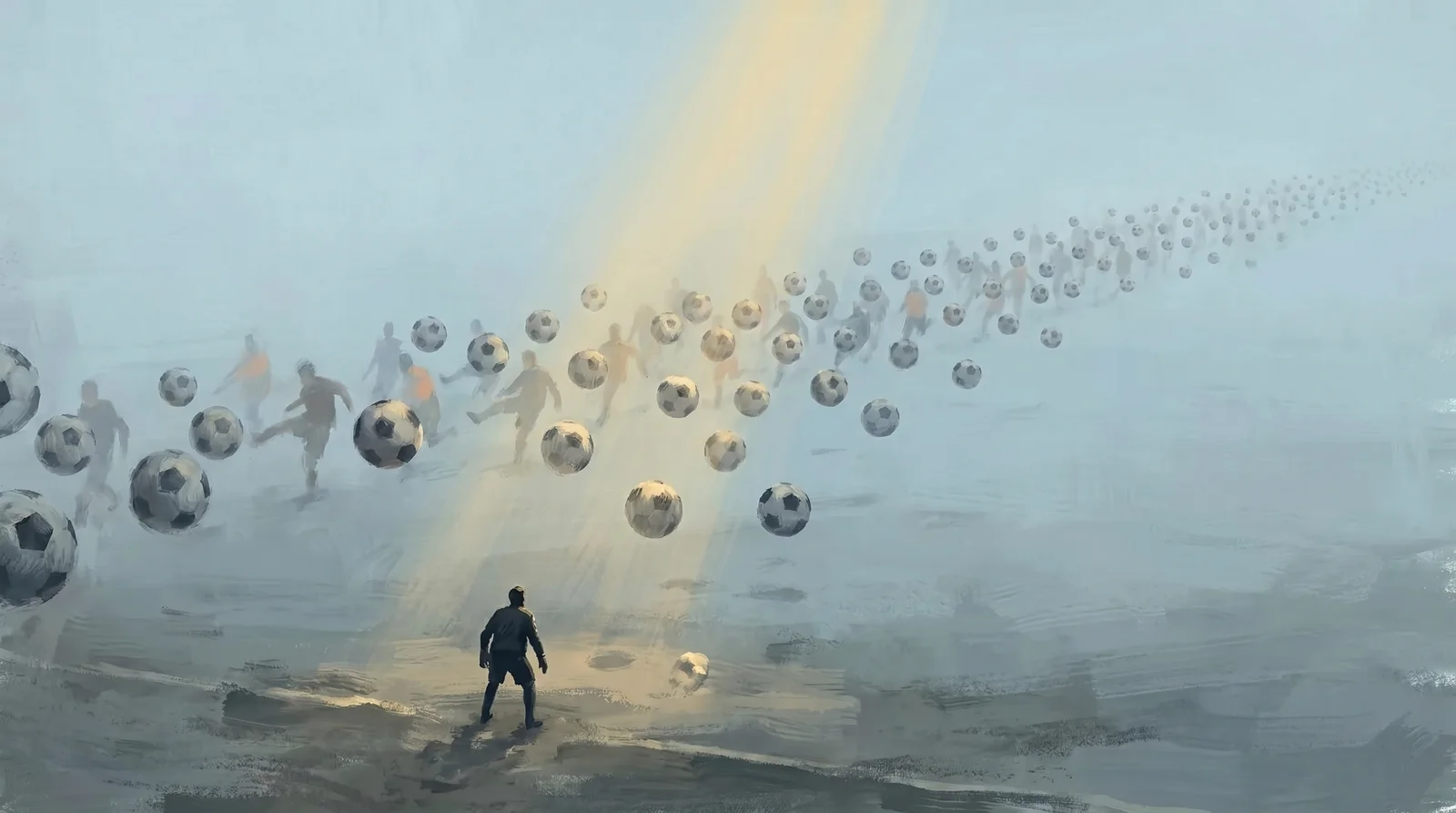
The Engineer's Anxiety at the Penalty Kick
How do you expect to be accountable for something you don't understand?
Imagine being a goalkeeper facing penalties eight hours a day, five days a week.
-
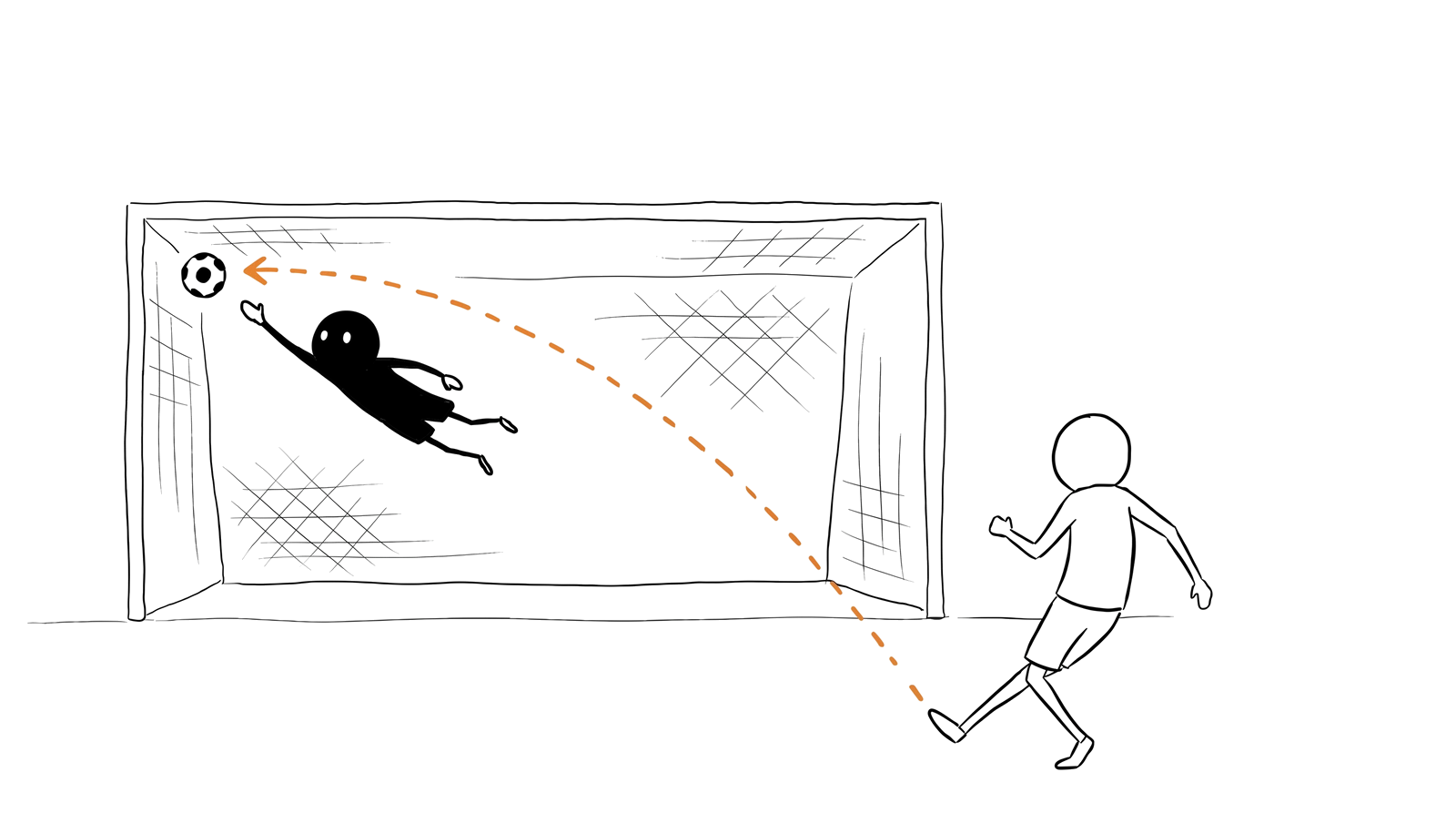
At the beginning of the week, you are charged, excited, looking to do as much as possible.
-

Then at some point you start losing the sense of meaning and responsibility.
-
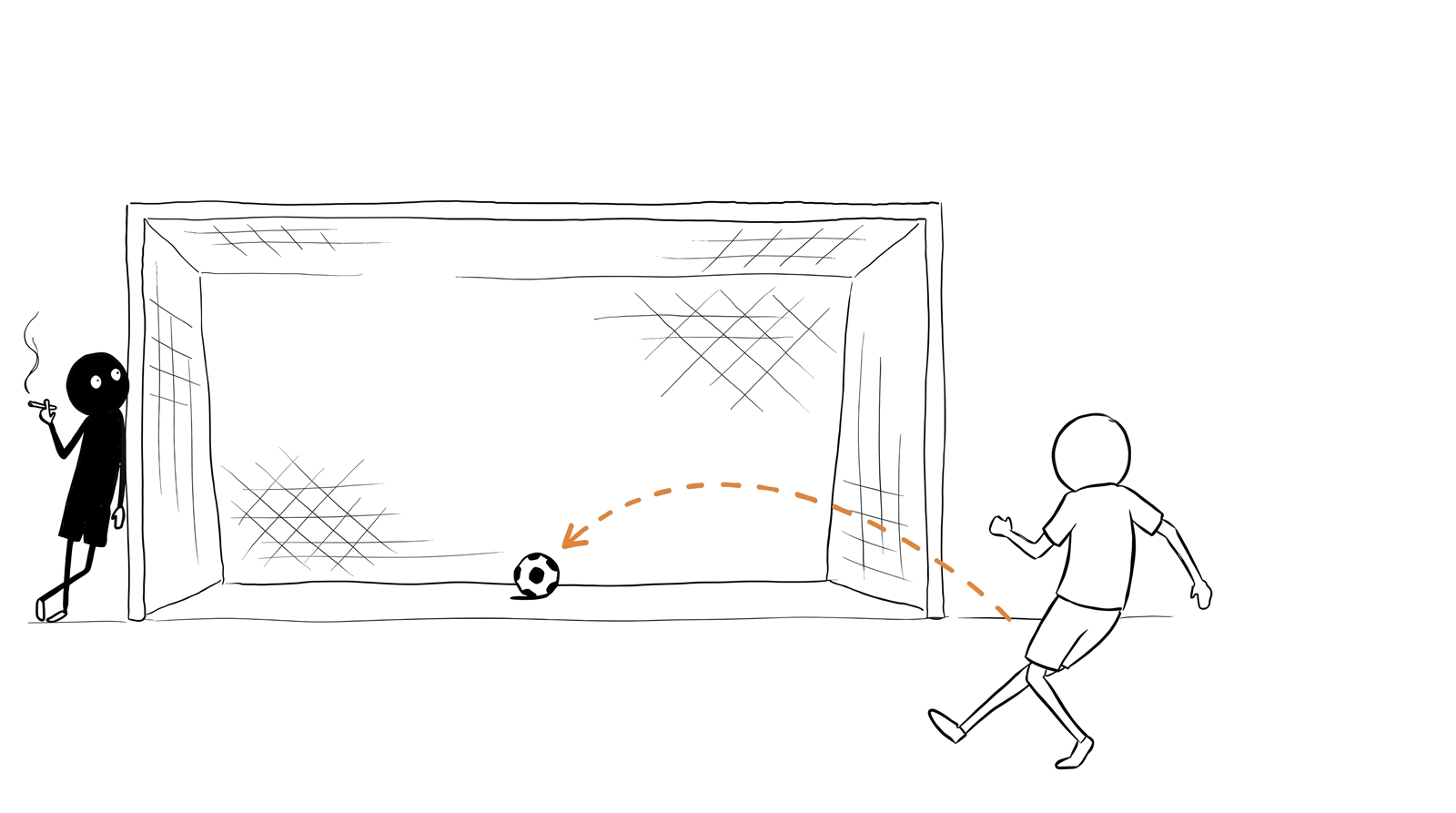
You overtrust slowly and believe the game will still be played with or without you.
-
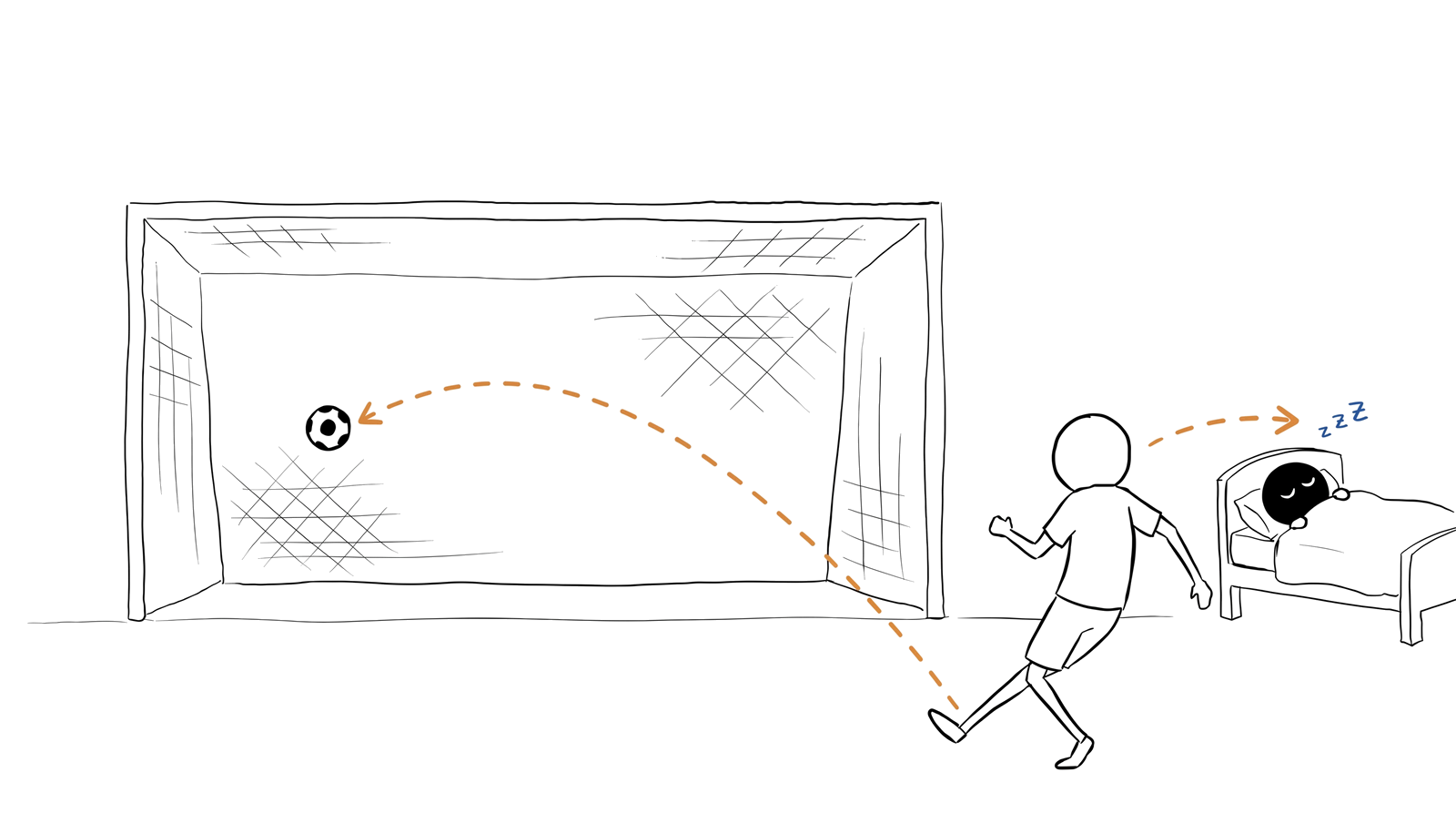
Then because you trust it, you keep the game playing even while you are asleep.
The goals got scored but you weren't there. No one was there, just a machine shooting endlessly in all directions, scoring easily.
Agentic coding multiplied how many decisions I have to stand behind, and that volume wears comprehension down. A migration here, a refactor there, a dependency bump, a schema change. I used to make a handful of calls in a day and could feel the weight of each one. Now the calls get thrown on me endlessly.
What concerns me is how quickly the calls stop feeling load-bearing. Each one is just another in the stream, so I swallow whatever without realising the decision or the stakes at hand.
If the model can do everything I can do and more, why do I need to exist?
It’s a question of position. The model can generate a decision. It can’t be the place the decision lands - it can’t bear the consequence, hold the liability, be the person an organization trusts, or want one outcome over another for reasons of its own.
Then what’s my job, if not to do the work?
To own it. And ownership without comprehension is just a signature. Engaged practice is the only way I know to build the comprehension that gives my judgment any weight. The easy version of this fear is being out-skilled. Mine is quieter - that I keep signing while I stop understanding what I sign.
Suppose the agent ships a migration that corrupts content in production. What happens to the agent? Nothing. There’s no Tuesday morning for it. What happens to you? You’re in the incident channel, your name is on the merge, your credibility takes the hit, your track record gets an asterisk. The consequences of the decision have somewhere to land - a continuous person with a reputation, a salary, a future, anxiety at 2am. The model generates the decision; you absorb its results.
So what could I do?
The trap is that disengagement doesn’t feel like disengagement. You steer the agent all day, your hands never leave the keyboard, and the motion feels like work. You can be busy approving and understand none of what you approve. Nothing in the loop stops to ask whether you still follow what you’re signing.
So the practice has to be deliberate - the comprehension won’t rebuild itself by accident. What that looks like for me, I’ve been figuring out in the open in moo.md, a public Claude Code plugin. I work an idea in one direction and refuse to rush it. It starts as a <seed> - the rawest, most honest version of what I actually want - grown until it ripens, never handed to my peers or my users before it does. I push that <seed> through /intent (what, exactly), then /shape (how, at a high level), then build it with the superpowers and other tools.
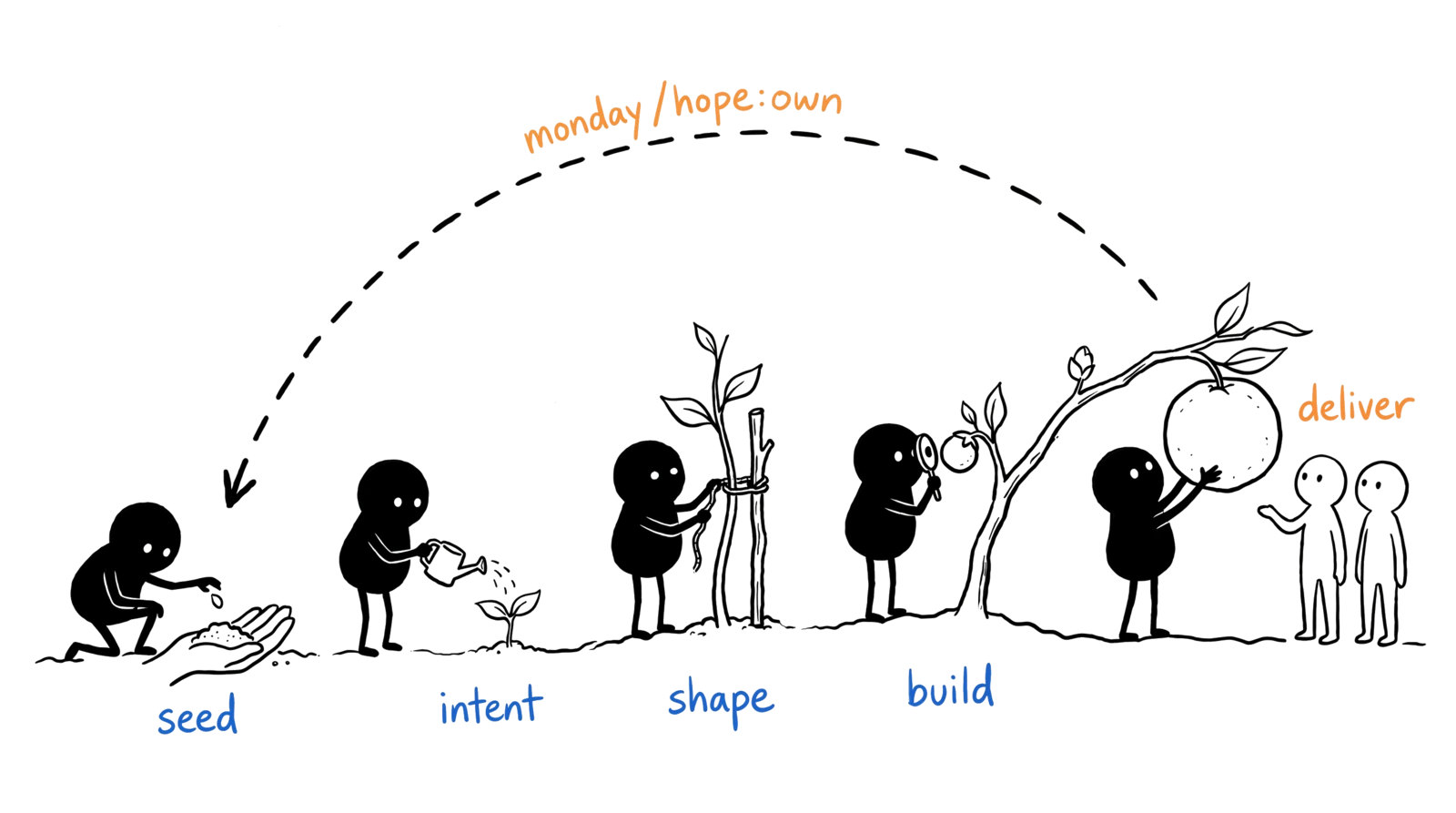
Grow the <seed> until it ripens, then deliver — and return every Monday to stay in the loop.
The line I won’t cross is delegating the decisions. The slow, interactive loop - from the <seed> through /intent and /shape - stays mine; I keep it under watch in soloterm as it grows. And rather than let that thinking pile up in one context until the agent compacts it behind my back, I hand each step off on a card: a durable, minimal, human-first note holding only the facts that survive without the session that made them. Compaction mutates the one artifact I’m meant to own, quietly, without me looking; a card is something I can carry, read quietly, edit, and hand back to the loop.
I /delegate the tactical, observable work - explore, implement, verify, etc. - never the judgment. Anything that touches the future of the project, or the cornerstones of the original intent, gets surfaced back to me by design, so I stay engaged, involved, and the one who cares how it turns out. And every Monday I run /own to check I still follow what’s shipped - that I’m the keeper on his line, not the one asleep while the game plays on.
If you feel it too, I remind myself from time to time: agentic tools don’t threaten my skills; at their current shape they threaten the practice that keeps my accountability honest.